

Mahjong 789Club is a game that uses a grid-based system where players continuously draw and discard tiles to build a complete hand. The key is not to memorize all the terminology from the start, but to recognize each tile group, understand how they can be combined, and track the changes in your hand with each turn. Once the fundamental concepts are clear, observing the progression of a Mahjong game becomes much easier.
The card system in Mahjong 789Club
Mahjong utilizes multiple groups of pieces with different shapes and functions. The three most common number groups are Characters, Dots, and Bamboo, each with values from 1 to 9. In addition, there is the Honor group, which includes Wind and Dragon pieces, creating matching sets instead of consecutive sequences.
Sorting cards from the start in Majong 789 Club helps players quickly identify which cards can be combined into sequences, which are suitable for matching sets, and which are usually kept as pairs. This is also the first step in systematically arranging your hand instead of looking at each card individually.
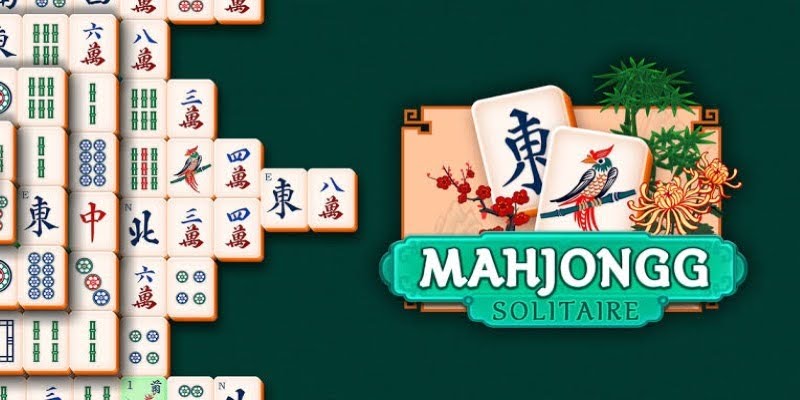
Three groups of troops
Characters, Dots, and Bamboo all use the number sequence from 1 to 9. For each suit, consecutive cards can form a Chow, such as 3-4-5 of the same suit. This is a characteristic combination that beginners need to recognize before delving into other hand types.
Wind and Dragon Group
East, South, West, North, along with Red Dragon, Green Dragon, and White Dragon, belong to the Honor group. These pieces don’t form sequences but are primarily paired or triplets, so they are handled differently from numbered pieces.
Four combinations make up a hand.
After identifying the groups of cards, the next step is understanding how they are combined into complete units. A common Mahjong hand is formed from four sets combined with a pair, totaling 14 cards when completed. Common sets include Chow, Pung, and Kong, while the pair makes up the rest of the hand.
A Chow consists of three consecutive cards of the same suit, a Pung consists of three identical cards, and a Kong consists of four identical cards. A pair consists of only two identical cards and is often referred to as the “eye” of a hand. Distinguishing between these four types helps players know which set a newly drawn card completes or simply creates another possible pair.
From initial hands to developing decks
At the start of a game, not all cards immediately form complete sets. A hand usually contains many different states: some sets are complete, some pairs are waiting for another card, two consecutive cards need another card to complete a Chow, and some cards are not yet linked together.
Instead of trying to hold onto all the cards they already have, players can observe which groups are more likely to develop. For example, a 4-5 Bamboo could wait for a 3 or 6 Bamboo to form a Chow, while two identical cards could continue to develop into a Pung or be held as a pair. This perspective turns each draw into an opportunity to update the structure of the hand.
How does changing hands work in a Mahjong 789Club round?
The basic gameplay revolves around drawing a piece and then discarding a piece, thereby maintaining a suitable number of pieces in hand for the next turn. After drawing, the player checks if the new piece completes the missing set or creates a better combination. If not necessary, another piece is discarded to continue the round.
It’s worth noting that the decision to discard a card depends not only on its individual value but also on the overall hand. A card standing alone can be replaced when it has little chance of connecting with the rest of the hand, while a card next to other cards of the same suit often has more development possibilities.
When is a hand considered complete?
A basic hand typically involves four combinations and a pair. Once the combinations are complete, players check the winning conditions corresponding to the rules of the Mahjong variant being used. Because Mahjong has many variations with different scoring systems and winning conditions, it should not be assumed that all games use the same set of rules.
For beginners, the first thing to remember is the structure of four sets and one pair. Once familiar with identifying Chow, Pung, Kong, and pairs, players can continue to learn about special hand types or scoring rules if the Mahjong 789Club system uses them.
Conclude
Mahjong 789Club has a rich card system, but the basic structure is accessible through very clear concepts: distinguishing card groups, identifying sequences and matching sets, maintaining suitable combinations, and gradually perfecting your hand. Once you understand how Chow, Pung, Kong, and pairs are formed, beginners can easily follow the process of each draw and continue to learn the advanced rules of Mahjong.