

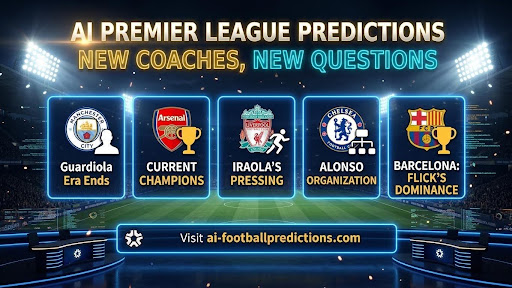
The Premier League has always been hard to predict. This season, it may be harder than ever.
Three different champions in three years. Big clubs rebuilding under new coaches. Three promoted sides with very different stories.
For bettors, that mix creates both risk and opportunity. Old assumptions no longer work, and the market is still learning what these teams really are.
Why This Season Is Different
Arsenal enter the campaign as defending champions after ending a 22-year wait for the title. Before them, Manchester City and Liverpool each took a turn at the top.
That rotation matters. When the same club wins every year, predictions become comfortable. When the crown keeps moving, every model has to work harder.
Bettors researching premier league ai predictions can use AI models to track how each team’s underlying performance changes from week to week, rather than relying on last season’s reputation. However, data needs context — new tactical systems, injuries and fixture congestion can all shift a team’s level quickly.
3 Storylines Every Model Must Handle
- Manchester City after Guardiola. For the first time in a decade, City start a season without Pep Guardiola. The squad remains elite, but a new coach means new patterns, and historical data carries less weight than usual.
- Liverpool under Andoni Iraola. Iraola is known for intense pressing and direct football. That style can produce big wins, but also more open matches — something worth watching in goals markets.
- Chelsea under Xabi Alonso. Alonso arrives with a strong reputation for building organised, flexible teams. Early results may look uneven while the ideas settle, which can create value before the market adjusts.
In all three cases, the lesson is the same: a new coach resets part of the data. The more matches a team plays under its new manager, the more reliable AI predictions become.
The Promoted Trio: Easy Targets or Hidden Value?
Coventry City, Ipswich Town and Hull City return to the top flight.
Coventry, led by Frank Lampard, won the Championship comfortably and come back after a 25-year absence. Ipswich bounced straight back after relegation, while Hull earned promotion through the play-offs.
Promoted teams are often priced as automatic relegation candidates. Sometimes that is fair. But clubs arriving with momentum and a clear identity can outperform expectations, especially at home.
For bettors, the key is patience. The first months show whether a promoted side can defend well enough to stay competitive, and that often matters more than how many goals it scores.
European Football and Fixture Congestion
A record-equalling nine English clubs are playing in Europe this season, five of them in the Champions League.
That means more midweek travel, more rotation and more tired legs on weekends. Some models include schedule factors, but coaches’ rotation decisions often appear only when line-ups are confirmed.
Following trusted outlets such as Sky Sports for press conferences and team news helps fill that gap before you place a bet.
How to Use AI Predictions for the Premier League
Start with the data, not the headlines. Look at chance creation, defensive stability and form against strong opponents.
Then compare the model’s view with the bookmaker’s odds. Value appears when the two disagree for a good reason.
Finally, add the human layer: team news, motivation and schedule. And always remember that no prediction guarantees a result — keep stakes sensible and betting enjoyable.
Reputation Is History, Form Is the Present
The Premier League rarely rewards bettors who live in the past.
Big names, famous coaches and last season’s table all tell a story, but not always the one that matters on Saturday.
In a league this unpredictable, the smartest bet is on evidence, not memory.