

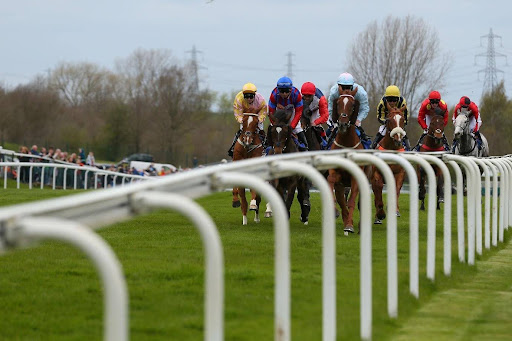
The St Leger at Doncaster brings the Flat season’s five Classics to a close each September, and this year’s renewal marks the 250th running of the oldest of them all. Anyone checking horse racing results from Town Moor is looking at a race with a longer unbroken history than any other Flat contest in Britain.
Few races carry the weight of tradition that the St Leger does, and its story stretches back long before any of the sport’s other Classic events existed.
Origins on Cantley Common
The race was founded by Lieutenant Colonel Anthony St Leger, an Anglo-Irish army officer and politician settled near Doncaster, who organised a sweepstake for three-year-old horses run over two miles on Cantley Common.
The first running took place on 24 September 1776 in front of a field of six horses, won by a filly recorded as Allabaculia. It was not until 1778, at the suggestion of the Marquess of Rockingham, that the race was formally named in St Leger’s honour and moved to its current home at Town Moor.
The oldest Classic and part of the Triple Crown
The St Leger predates the Derby by four years, the Oaks by three, and the 2000 Guineas by around a quarter of a century, making it comfortably the oldest of Britain’s five Classic races. It now forms the final leg of the Triple Crown for colts, following the 2000 Guineas and the Derby, and the Fillies’ Triple Crown alongside the 1000 Guineas and the Oaks.
The extended distance of one mile, six furlongs and around 115 yards makes it a genuine test of stamina rather than speed, which explains why the last colt to complete the Triple Crown was Nijinsky in 1970, with Oh So Sharp the last filly to do so in 1985.
Record breaking jockeys
Jockey Bill Scott holds the record for the most St Leger victories, riding nine winners during the first half of the 19th century, including Jack Spigot in 1821 and Sir Tatton Sykes in 1846. John Jackson and Lester Piggott share second place with eight wins apiece, while Frankie Dettori’s six victories, including Shantou in 1996, mark him out as the standout jockey of the modern era.
The race has also produced its share of shocks, none bigger than Theodore’s win at 200/1 in 1822, the longest priced Classic winner in British turf history.
Trainers who have dominated the race
John Scott, known in his era as the Wizard of the North, trained more St Leger winners than any other handler during the race’s Victorian heyday, a dominance built on his stable’s reputation for producing genuine stayers.
In the modern era, Aidan O’Brien’s Ballydoyle operation has become a familiar presence towards the front of the market most years, with jockey Ryan Moore’s accumulating tally of St Leger wins closely tied to that yard’s continued success.
Why the St Leger still matters
Some modern trainers now bypass the St Leger in favour of the Prix de l’Arc de Triomphe a few weeks later, reflecting how the sport’s priorities have shifted over 250 years. Even so, a race that predates every other British Classic and has survived world wars, relocations and changing fashions in breeding remains one of the genuine highlights of the Flat racing calendar every autumn.